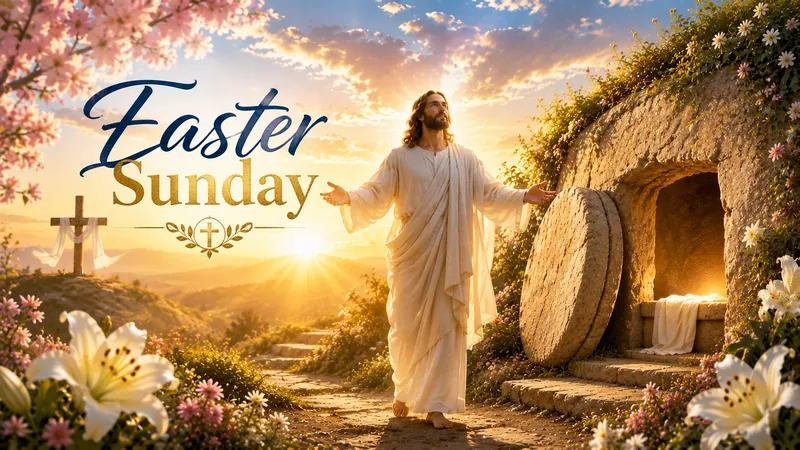
Easter Sunday: Meaning, Bible Story, History, Traditions, Prayers & Blessings
Easter Sunday is the day Christians celebrate the resurrection of Jesus Christ. It is the heart of the Easter season and the joyful conclusion of Holy Week. Christians remember that Jesus, who was crucified and buried after Good Friday, rose from the dead on the first day of the week. The resurrection is the central event behind the Christian hope of forgiveness, salvation, and eternal life.
But Easter Sunday is more than a date on the Christian calendar. It brings together the story of Jesus’ death and resurrection, the empty tomb, the promises of Scripture, and the hope that Christians find in Christ. It is also a day when families and churches gather for worship, prayer, Bible reading, meals, and celebrations.
In this guide, you’ll learn what Easter Sunday means, what the Bible says about the resurrection, how it fits into Holy Week, why its date changes each year, and how Christians observe it. You’ll also find Easter Bible verses, prayers, blessings, and messages to help make the day more meaningful.
What Is Easter Sunday?
Easter Sunday is the Christian celebration of Jesus Christ’s resurrection from the dead. According to the four Gospels, women went to Jesus’ tomb on the first day of the week and found that the tomb was empty. The Gospel accounts in Matthew 28, Mark 16, Luke 24, and John 20 describe the discovery of the empty tomb and Jesus’ appearances to his followers.
Because of this, Easter Sunday is also commonly called Resurrection Sunday. For Christians, the resurrection is not simply the ending of the Easter story. It is the foundation of Christian faith and a source of hope. The New Testament connects Jesus’ resurrection with forgiveness, justification, and the promise of life in Him.
What Does Easter Sunday Mean?
At its center, Easter Sunday means Jesus is risen.
The events of Holy Week lead to this moment. Palm Sunday begins the week, followed by Maundy Thursday and the Last Supper, Good Friday and the crucifixion, and Holy Saturday. Easter Sunday brings the story to its joyful turning point with the resurrection.
For Christians, the resurrection points to God’s victory over sin and death. It also gives meaning to the hope of eternal life and reminds believers that the story of Jesus did not end at the cross.
Why Do Christians Celebrate Easter Sunday?
Christians celebrate Easter Sunday because Jesus’ resurrection is central to the Christian message. The resurrection confirms the hope proclaimed in the Gospels and gives believers a reason to celebrate, worship, and place their faith in Christ.
Easter is therefore both a celebration and a time for reflection. Churches may gather for worship, Scripture reading, prayer, communion, singing, and other Easter services. Families may also come together to share a meal or remember the meaning of the day in their own traditions.
Why Is Easter Also Called Resurrection Sunday?
The name Resurrection Sunday points directly to what Christians are celebrating: the resurrection of Jesus Christ.
The Gospel accounts place the discovery of the empty tomb on the first day of the week. Matthew, Mark, Luke, and John each give their own account of that morning and the events that followed.
For many Christians, calling it Resurrection Sunday keeps the focus on the central message of the day—the risen Christ and the hope found in Him.
What Happened on Easter Sunday According to the Bible?
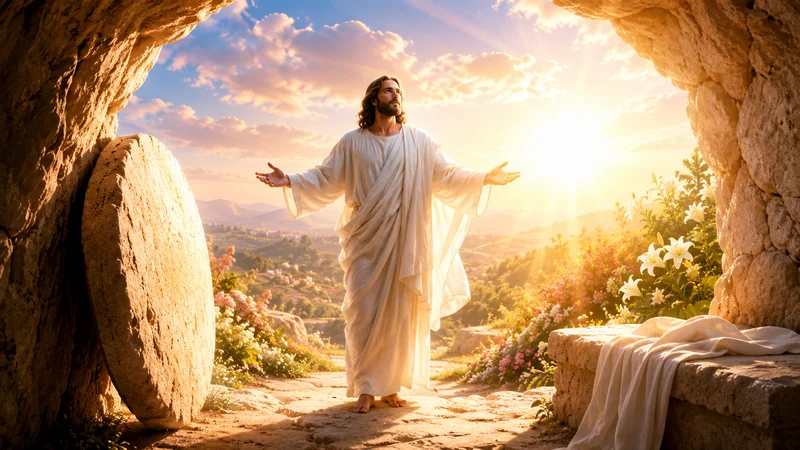
The Easter Sunday story begins early in the morning, when Jesus’ followers went to His tomb and discovered that the stone had been moved away. What they found there became the central message of the Christian faith: the tomb was empty, and Jesus had risen from the dead.
The four Gospels—Matthew, Mark, Luke, and John—each record the resurrection. Their accounts share the central events while giving different details about the people who came to the tomb, what they saw, and what happened afterward.
The Empty Tomb
After Jesus’ crucifixion and burial, His followers came to the tomb on the first day of the week. They expected to find His body there, but the tomb was empty.
In the Gospel accounts, the women who came to the tomb became some of the first witnesses to the resurrection. They were told that Jesus was not there because He had risen.
The empty tomb changed the direction of the disciples’ story. What had seemed like the end became the beginning of their proclamation that Jesus was alive.
The Women Discover the Empty Tomb
The Gospel accounts give special attention to the women who went to the tomb. Matthew, Mark, Luke, and John each describe their discovery of the empty tomb, although the details vary between the accounts.
They came expecting to care for Jesus’ body, but instead encountered the unexpected news of His resurrection. They were then connected with the message that Jesus had risen and would meet His followers.
Their role is an important part of the Easter Sunday story because they became early witnesses to what had happened.
Jesus Appears After His Resurrection
The Easter story does not end with the empty tomb. The Gospels also describe appearances of the risen Jesus to His followers.
These encounters helped the disciples understand that the resurrection was not simply a story about an empty burial place. Jesus appeared to people who had followed Him, spoken with them, and witnessed the events surrounding His death.
The disciples’ response to these encounters became an important part of the early Christian message. They went from mourning Jesus’ death to proclaiming His resurrection.
The Four Gospel Accounts of the Resurrection
The resurrection is recorded in all four Gospels, but each account has its own emphasis.
Matthew 28 describes the women arriving at the tomb, the angel’s message, and Jesus meeting the women afterward.
Mark 16 begins with the women coming to the tomb and discovering that the stone had been rolled away. The account points them toward the news that Jesus had risen.
Luke 24 describes the women finding the empty tomb and later records Jesus meeting two followers on the road to Emmaus before appearing to His disciples.
John 20 gives a detailed account of Mary Magdalene discovering the empty tomb and later encountering the risen Jesus. John also records Jesus appearing to His disciples and His meeting with Thomas.
Taken together, these Gospel accounts give Christians the biblical foundation for Easter Sunday. The details are not identical, but they center on the same message: Jesus was crucified, His tomb was found empty, and His followers came to believe that He had risen from the dead.
What Does the Empty Tomb Mean?
For Christians, the empty tomb is closely connected with the resurrection of Jesus. It points beyond Good Friday and the crucifixion to God’s work in raising Christ from the dead.
The resurrection became the source of the disciples’ message and a foundation of Christian hope. Easter Sunday therefore looks back at what happened in Jerusalem and forward to the hope Christians have because of the risen Christ.
This is why the Easter message is not simply, “Jesus died.” It is the fuller story of Jesus’ death, resurrection, and the hope that His resurrection gives to those who believe in Him.
Why Is the Resurrection of Jesus Important?
The resurrection of Jesus is at the center of the Christian faith. Easter Sunday reminds Christians that Jesus’ death on the cross was not the end of His story. His resurrection gives meaning to the Christian message of salvation and points believers toward hope, forgiveness, and eternal life.
The Apostle Paul placed great importance on the resurrection. In 1 Corinthians 15, he connects Christ’s resurrection with the hope Christians have in their own future resurrection. Without the resurrection, the Christian message would lose its foundation. With it, believers have a reason to live with faith and hope.
Victory Over Sin and Death
The resurrection points to God’s victory over sin and death.
Jesus’ crucifixion is central to the Christian understanding of His sacrifice, while His resurrection shows that death did not have the final word. For Christians, Easter Sunday is therefore a celebration of life overcoming death and hope overcoming despair.
This message is one reason Easter remains such an important day of worship. Christians gather to remember Christ’s sacrifice and celebrate His resurrection.
Hope of Eternal Life
Easter also points Christians toward the hope of eternal life.
Jesus taught about resurrection and life throughout His ministry. In John 11:25, He speaks of Himself as the resurrection and the life. His resurrection gives Christians a reason to trust God’s promise of life beyond death.
That hope does not mean Christians never experience grief, fear, or difficult seasons. Instead, Easter reminds believers that death is not viewed as the final destination for those who place their faith in Christ.
Forgiveness and Salvation
The resurrection is also closely connected with the Christian message of forgiveness and salvation.
The New Testament presents Jesus’ death and resurrection together. His sacrifice on the cross and His resurrection are not separate ideas in the Easter story. They are part of the Gospel message Christians proclaim.
Because of this, Easter Sunday can be a time to reflect on God’s forgiveness and the salvation Christians believe is offered through Jesus Christ.
The Promise of New Life in Christ
The resurrection also carries a message of new life.
For Christians, following Christ is not simply about remembering something that happened in the past. The resurrection points toward a changed life shaped by faith, love, forgiveness, and hope.
This idea of new life appears throughout the New Testament. Easter can therefore become a personal reminder to leave behind old patterns, grow in faith, forgive others, and live with a renewed sense of purpose.
What the Resurrection Means for Christians Today
The meaning of Easter does not end when the church service is over.
The resurrection gives Christians a reason to hold on to hope during difficult times, to trust God when the future is uncertain, and to remember that their faith is centered on the risen Christ.
For some people, Easter Sunday is also a time to return to church after being away, reconnect with family, read Scripture, or spend quiet time in prayer. For others, it may be the first time they have seriously considered what the resurrection means.
At its heart, the Easter message is simple: Jesus died, Jesus was raised, and Christians place their hope in the risen Christ.
That message of resurrection, forgiveness, salvation, and eternal life is what gives Easter Sunday its lasting meaning.
How Does Easter Sunday Fit Into Holy Week?
Easter Sunday is the final and most joyful day of Holy Week, but its meaning becomes clearer when you understand the days that lead up to it. Holy Week follows the final events of Jesus’ earthly ministry, beginning with His arrival in Jerusalem and moving through the Last Supper, crucifixion, burial, and resurrection.
For Christians, these days tell one connected story. The celebration of Easter Sunday does not stand alone; it comes after the sorrow and sacrifice remembered throughout the rest of Holy Week.
Palm Sunday
Palm Sunday marks the beginning of Holy Week. Christians remember Jesus entering Jerusalem while crowds welcomed Him with palm branches.
The event is recorded in all four Gospels and is often understood as the beginning of the final week leading to Jesus’ crucifixion and resurrection.
Palm Sunday carries both celebration and anticipation. The joyful welcome of Jesus is followed by the serious events that unfold during the days ahead.
Maundy Thursday and the Last Supper
Maundy Thursday remembers the Last Supper Jesus shared with His disciples before His crucifixion.
During this meal, Jesus spoke with His disciples about His coming death and taught them about love and service. The evening is also associated with Jesus washing His disciples’ feet, giving Christians an example of humble service.
For many Christian traditions, Maundy Thursday includes worship, communion, Scripture reading, and reflection on Jesus’ final evening with His disciples.
Good Friday and the Crucifixion
Good Friday is the day Christians remember the crucifixion of Jesus.
After being arrested and condemned, Jesus was taken to the place of crucifixion. Christians remember His suffering and death on the cross as a central part of the Gospel story.
Good Friday is generally a solemn day of worship and reflection. Churches may hold services focused on the cross, Scripture, prayer, silence, and the sacrifice of Jesus.
The story, however, does not end at the cross. The sorrow of Good Friday leads into the hope celebrated on Easter Sunday.
Holy Saturday
Holy Saturday is the day between Good Friday and Easter Sunday.
It remembers the time when Jesus’ body had been placed in the tomb. In many Christian traditions, it is a quiet day of waiting and reflection.
Some churches observe an Easter Vigil on Saturday evening. This service marks the transition from the darkness of Holy Saturday to the celebration of Christ’s resurrection.
Easter Sunday and the Resurrection
Easter Sunday brings Holy Week to its joyful conclusion.
According to the Gospel accounts, Jesus’ followers discovered that His tomb was empty on the first day of the week. They received the news that He had risen, and the risen Jesus later appeared to His followers.
For Christians, this is the defining event of Easter. Palm Sunday, Maundy Thursday, Good Friday, and Holy Saturday all lead toward this moment.
The movement from the cross to the empty tomb also explains why Easter carries such a strong message of hope. Christians remember Jesus’ sacrifice while celebrating His resurrection.
What Is the Easter Triduum?
The Easter Triduum is the three-day period that traditionally focuses on the final events of Jesus’ earthly life: His Last Supper, crucifixion, and resurrection.
It begins with the evening celebration of Maundy Thursday, continues through Good Friday and Holy Saturday, and reaches its climax with Easter Sunday.
The Triduum is especially important in Catholic and some other Christian traditions. It gives worshippers a way to experience the Easter story as one connected movement—from Jesus’ final meal and sacrifice to the celebration of the resurrection.
When Is Easter Sunday?
Unlike Christmas, Easter Sunday does not fall on the same date every year. It is a movable Christian feast, which means its date changes from year to year.
For Christians in the United States, Easter Sunday is observed in March or April. The date is connected to the timing of the spring season and the church’s method for determining Easter.
When Is Easter Sunday 2026?
In 2026, Easter Sunday falls on April 5.
That year, the main days of Holy Week are:
- Palm Sunday — March 29
- Maundy Thursday — April 2
- Good Friday — April 3
- Holy Saturday — April 4
- Easter Sunday — April 5
These dates place Easter Sunday at the end of Holy Week, following the remembrance of Jesus’ crucifixion and burial.
When Is Easter Sunday 2027?
In 2027, Easter Sunday falls on March 28.
The date changes each year, but the purpose of Easter remains the same: Christians gather to celebrate the resurrection of Jesus Christ.
Why Does the Date of Easter Change Every Year?
Easter has a different date because it is not fixed to one day of the calendar.
The traditional calculation connects Easter with the Paschal Full Moon, which is used by the Christian calendar to determine when Easter Sunday should be observed. Easter is then celebrated on the Sunday that follows it.
This is why Easter can occur on different Sundays in March or April.
The calculation can seem complicated because it involves the church calendar rather than simply using the astronomical full moon that appears in the sky each month. The spring equinox also plays an important role in the traditional method used to determine the Easter date.
How Is the Date of Easter Determined?
The Western Christian churches generally use the Gregorian calendar when calculating Easter. The basic rule places Easter Sunday on the Sunday following the Paschal Full Moon, with the calculation beginning from the church’s traditional date for the spring equinox.
This method is known as the computus, the system used to calculate the date of Easter.
Eastern Orthodox churches use a different calendar tradition for parts of the calculation, including the Julian calendar. As a result, Orthodox Easter can fall on a different Sunday from Easter in Western churches.
Why Can Orthodox Easter Be on a Different Date?
Catholic, Protestant, and many other Western Christian churches normally follow the Gregorian calendar for Easter calculations. Eastern Orthodox churches traditionally use the Julian calendar framework for determining the date.
Because the two calendar systems can produce different results, Orthodox Easter and Western Easter do not always fall on the same day.
When the dates do match, Christians from different traditions celebrate Easter together on the same Sunday. When they do not, each tradition follows its own calendar calculation.
Easter Is More Than a Date
Knowing the Easter date helps families plan church services, travel, gatherings, and other traditions. But the changing date does not change the meaning of Easter Sunday.
Whether Easter falls in March or April, Christians celebrate the same central message: Jesus Christ rose from the dead, and His resurrection is a source of faith and hope.
What Is the History of Easter Sunday?
The history of Easter Sunday goes back to the earliest Christians who gathered to remember the resurrection of Jesus. The resurrection was central to their faith, so remembering it became an important part of Christian worship.
Easter also developed alongside the Jewish festival of Passover, since the final events of Jesus’ life took place during the Passover period described in the New Testament.
Easter and the Early Christian Church
The first Christians did not celebrate Easter in exactly the same way that churches do today. Their worship grew over time as Christian communities spread to different places.
Remembering Jesus’ death and resurrection was already an important part of early Christian faith. As the Church developed its calendar, the days surrounding the resurrection became more clearly marked through worship and remembrance.
Holy Week eventually became a way for Christians to walk through the final days of Jesus’ earthly ministry, leading to the celebration of Easter Sunday.
What Is the Connection Between Easter and Passover?
Easter and Passover are closely connected in the story of Jesus.
The Gospels place Jesus’ final meal, crucifixion, and death around the time of Passover. Passover itself remembers how God delivered the Israelites from slavery in Egypt.
The New Testament also uses Passover language when describing Jesus. Paul refers to Christ as “our Passover lamb” in 1 Corinthians 5:7.
For Christians, this connection helps explain why the events surrounding Jesus’ death and resurrection are closely linked with the Passover story.
What Does Pascha Mean?
The word Pascha is an ancient Christian term for Easter. It comes through languages used by early Christians and is related to the Hebrew word Pesach, meaning Passover.
Many Christian traditions still use a form of this word today. For example, Easter is called Pascha in several Eastern Christian traditions.
The word highlights the historical connection between the Christian celebration of Jesus’ resurrection and the Passover season.
How Did Easter Become a Major Christian Feast?
As Christianity spread, churches developed more organized ways of observing the death and resurrection of Jesus.
The period leading to Easter became connected with fasting, prayer, baptism, and special worship services. Lent developed as a season of preparation, while Holy Week became a focused time of remembering Jesus’ final days.
Easter Sunday then became the joyful celebration at the center of this season.
What Was the Council of Nicaea’s Role in the Easter Date?
The Council of Nicaea, held in AD 325, is often mentioned when discussing the history of the Easter date.
The council addressed important questions facing the early Christian Church, including the timing of Easter. The history of the Easter calculation is more complicated than a single decision made at Nicaea, but the council is an important part of the story of how Christians sought a common way to observe the feast.
Over the centuries, different calendar systems and methods of calculation continued to affect the date of Easter.
Why Does Easter Have Such a Long History?
Easter has remained central to Christian worship because its focus has remained the resurrection of Jesus Christ.
The way churches calculate the date, conduct services, or observe Holy Week has developed over many centuries. Traditions can differ between Christian denominations and countries, but the central Christian celebration remains tied to the resurrection.
That long history is also why Easter today includes several layers: biblical remembrance, church worship, seasonal practices, family traditions, and cultural customs.
Why Is Easter Called “Easter”?
The name Easter has a different history from the Christian event it now describes. The resurrection of Jesus is the central reason Christians celebrate Easter, but the English word “Easter” has its own story.
In many other languages, the Christian celebration is known by a name related to Pascha, the word connected with Passover. English is one of the languages where the word “Easter” became the common name.
Where Does the Word Easter Come From?
The exact history of the English word “Easter” is not completely certain.
One early source often discussed is the English church writer Bede, who wrote about a month called Eosturmonath in connection with an older seasonal name. Over time, the English word developed into the term used for the Christian celebration.
Because the evidence from early English history is limited, it is better to avoid saying that the Christian celebration itself came from a pagan festival simply because the English name has an older history.
The important distinction is between the history of the word “Easter” and the Christian belief in Jesus’ resurrection. They are not the same question.
Easter, Pascha, and Passover
Many Christian traditions use a form of Pascha rather than Easter.
Pascha is connected linguistically with Pesach, the Hebrew word for Passover. This reflects the connection between Jesus’ final days and the Passover period described in the Gospels.
The English word “Easter” therefore differs from the names used in many other languages, but Christians around the world can still be referring to the same central celebration of Jesus Christ’s resurrection.
Why Do Different Languages Use Different Names for Easter?
Different languages developed their own names for the Christian feast.
English uses Easter, while many languages use forms of Pascha. For example, Spanish uses Pascua, French uses Pâques, and Italian uses Pasqua.
These names have a common connection with the ancient word for Passover.
The variety of names does not change the central Christian message. Easter, Pascha, and related names point to the celebration of Christ’s resurrection, even though the words themselves have different histories.
How Do Christians Celebrate Easter Sunday?
Christians celebrate Easter Sunday in different ways, depending on their church tradition, family customs, and personal faith. For many, the day begins with worship and Scripture and continues with time spent with family and friends.
Churches may hold special Easter services, sing songs of praise, read passages about the resurrection, share communion, or gather for prayer. Families may also have their own traditions, such as sharing a meal, visiting relatives, or setting aside quiet time to reflect on the meaning of Easter.
Although practices vary, the focus for Christians remains the resurrection of Jesus Christ.
What Are Common Easter Traditions and Symbols?
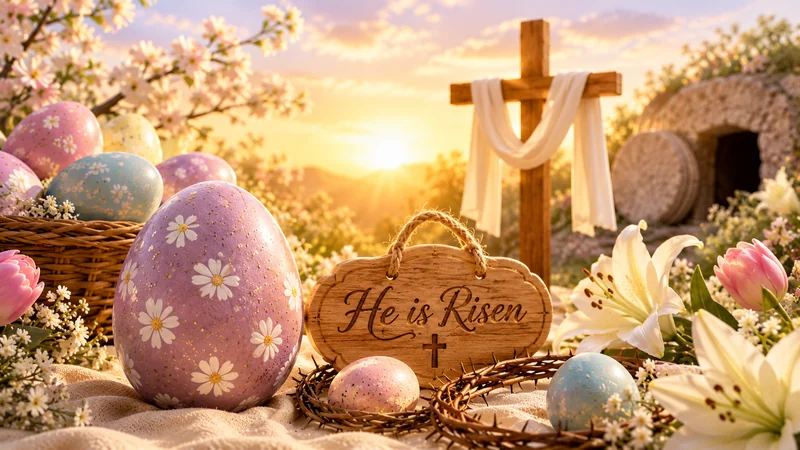
Easter Sunday is celebrated through both Christian worship and cultural traditions. Some customs developed within Christian communities, while others became popular as part of springtime celebrations and family life.
Easter eggs, the Easter Bunny, flowers, baskets, and special meals are familiar sights in the United States. These traditions can be part of a family’s celebration, but they are different from the biblical account of Jesus’ resurrection.
Easter Eggs
Easter eggs are one of the most familiar Easter traditions.
Eggs have long been associated with new life, and Christians in some traditions came to connect the egg with the resurrection. The practice of decorating eggs also became part of Easter customs in different cultures.
Today, American families may decorate eggs, organize Easter egg hunts, or give children chocolate eggs and other treats.
The egg can be a reminder of new life, but the central Christian message of Easter remains the resurrection of Jesus.
The Easter Bunny
The Easter Bunny is a popular cultural symbol, especially in the United States and among children.
The bunny became connected with Easter traditions through European customs and later became part of American Easter celebrations. Today, children may receive chocolate rabbits, stuffed bunnies, or Easter baskets filled with treats.
The Easter Bunny does not appear in the Bible. It is a cultural Easter tradition rather than part of the biblical resurrection story.
Easter Lilies and Flowers
Flowers are commonly used to decorate churches and homes during Easter.
The Easter lily is especially associated with the holiday. Its white color and trumpet-shaped flower have made it a popular Easter symbol, and many Christians connect it with ideas such as purity, hope, and new life.
Other spring flowers may also appear in Easter decorations and church services.
Easter Baskets, Candy, and Gifts
Easter baskets are a familiar tradition for many American families.
Parents and relatives may fill baskets with candy, chocolate, small toys, books, or other gifts. Children may receive their baskets after an Easter egg hunt or during a family gathering.
These gifts are part of the cultural side of Easter. They can add fun to the celebration, while the Christian focus remains on Jesus’ resurrection.
Easter Family Meals and Gatherings
For many families, Easter Sunday is a time to gather around the table.
A family may prepare a special meal, visit relatives, invite friends, or spend the afternoon together after church. The food and traditions can vary from one household to another.
Sharing a meal can also create a simple opportunity for families to talk about faith, read the Easter story, or say a prayer of thanksgiving.
What Does the Cross Symbolize at Easter?
The cross is one of the most important Christian symbols connected with Easter.
Christians remember the cross as the place where Jesus was crucified on Good Friday. Easter Sunday then points to His resurrection.
This connection is important because the Christian Easter story includes both the cross and the empty tomb. The cross reminds Christians of Jesus’ sacrifice, while the resurrection points to victory over death and the hope found in Christ.
Which Easter Traditions Are Biblical?
The Bible does not give instructions for modern customs such as Easter egg hunts, Easter baskets, chocolate rabbits, or decorating eggs.
These traditions developed over time and became part of Easter celebrations in different cultures.
The biblical foundation of Easter is the resurrection of Jesus Christ. Families and churches may choose to enjoy cultural traditions while keeping the resurrection, worship, prayer, and Scripture at the center of their celebration.
What Bible Verses Are Best for Easter Sunday?
Easter Sunday is a natural time to read Bible passages about the resurrection of Jesus, hope, salvation, and new life. The four Gospels tell the story of the empty tomb, while other New Testament passages explain why the resurrection matters to Christian faith.
There is no single “best” Easter Bible verse for everyone. A verse about the empty tomb may be right for Easter morning, while another passage about hope or eternal life may speak more deeply to someone going through a difficult season.
Bible Verses About the Resurrection of Jesus
The clearest Easter passages are found in the resurrection accounts of Matthew, Mark, Luke, and John.
Matthew 28:1–10 tells how Mary Magdalene and the other Mary came to the tomb and discovered that Jesus had risen. The passage then describes Jesus meeting the women and sending them to tell His disciples.
Mark 16:1–8 records the women coming to the tomb and finding that the stone had been rolled away. They received the news that Jesus had risen.
Luke 24:1–12 describes the empty tomb and the message given to the women who came there. Luke later records Jesus meeting His followers and explaining the Scriptures concerning Him.
John 20:1–18 gives special attention to Mary Magdalene and her encounter with the risen Jesus. The chapter also continues with Jesus appearing to His disciples.
Together, these passages form the main Gospel reading for Easter Sunday and give readers four accounts of the resurrection story.
Short Easter Bible Verses
Short verses can be helpful for Easter cards, church bulletins, family gatherings, or a simple Easter morning reflection.
Matthew 28:6 points directly to the empty tomb and the resurrection of Jesus.
John 11:25 connects Jesus with resurrection and life.
1 Corinthians 15:20 describes Christ as having been raised from the dead and connects His resurrection with the hope of those who belong to Him.
Romans 6:9 teaches that Christ, having been raised from the dead, will not die again.
These short passages are easy to remember while still pointing toward the heart of the Easter message.
Bible Verses About Hope and New Life
Easter is also a time to remember the hope Christians find in the resurrection.
1 Peter 1:3 connects the resurrection of Jesus Christ with a living hope. This makes it especially meaningful for people who need encouragement during a difficult season.
Romans 6:4 connects Christ’s resurrection with walking in newness of life.
Philippians 3:10 speaks about knowing Christ and the power of His resurrection.
These passages remind readers that Easter is not only about remembering an event from the past. The resurrection also shapes the way Christians understand hope and new life.
Bible Verses About Salvation and Eternal Life
The resurrection is closely connected with the Christian message of salvation.
Romans 4:25 connects Jesus’ death and resurrection with God’s saving work.
1 Corinthians 15:3–4 gives a short summary of the Gospel: Christ died, was buried, and was raised on the third day according to the Scriptures.
John 11:25–26 connects belief in Jesus with resurrection and life.
These passages can help someone move beyond the question of what happened on Easter and think about what Christians believe the resurrection means for faith, salvation, and eternal life.
Gospel Passages About the Empty Tomb
If you want to read the Easter story itself, start with the four Gospel accounts:
- Matthew 28:1–10 — The women discover the empty tomb and meet the risen Jesus.
- Mark 16:1–8 — The women find the stone rolled away and hear the resurrection announcement.
- Luke 24:1–12 — The women discover the empty tomb and remember Jesus’ words about rising again.
- John 20:1–18 — Mary Magdalene discovers the empty tomb and later sees Jesus.
Reading these passages together gives a fuller picture of Easter Sunday while allowing each Gospel to speak in its own way.
A Simple Easter Bible Reading Plan
If you want to spend a few quiet moments in Scripture on Easter morning, you could read the passages in this order:
Start with Matthew 28:1–10 to read the resurrection account.
Continue with John 20:1–18 to follow Mary Magdalene’s experience at the empty tomb.
Read Luke 24:1–12 to revisit the discovery of the empty tomb.
Finish with 1 Corinthians 15:20–22 to reflect on what the resurrection means for Christian hope.
You do not need to read every passage at once. Even one Gospel account can give you meaningful time to pause, pray, and reflect on the resurrection of Jesus.
Easter Sunday Prayers
Easter Sunday is a meaningful time to pause, thank God, and reflect on the resurrection of Jesus Christ. A prayer can be as simple as a few words of gratitude or as personal as a quiet conversation with God.
You can pray alone, with your family, before an Easter meal, at church, or at the beginning of the day. The prayer does not need complicated words. What matters is coming before God with a sincere heart and remembering the hope Christians find in the risen Christ.
A Simple Easter Sunday Prayer
Heavenly Father, thank You for the gift of this Easter Sunday. Thank You for Jesus Christ and for the hope we have through His resurrection. Help us remember the meaning of the empty tomb and live with faith, love, and gratitude. Guide our hearts today and throughout the days ahead. In Jesus’ name, Amen.
Easter Morning Prayer
Lord God, thank You for giving us a new morning and for the joy of Easter. As we remember the resurrection of Jesus, fill our hearts with hope and peace. Help us keep our attention on You instead of becoming distracted by the busyness of the day. Give us thankful hearts and help us share Your love with the people around us. In Jesus’ name, Amen.
Easter Prayer of Thanksgiving
Father, we thank You for Your love, mercy, and grace. Thank You for sending Jesus and for the hope Christians have because He was raised from the dead. Thank You for our families, friends, church communities, and the blessings we sometimes forget to notice. Teach us to live with grateful hearts and to remember Your goodness beyond Easter Sunday. Amen.
Easter Family Prayer
Dear God, thank You for bringing our family together this Easter. Thank You for the food before us, the people beside us, and the gift of another day together. Help us understand the meaning of Jesus’ resurrection and grow stronger in faith and love. Watch over our family and guide us in the days ahead. In Jesus’ name, Amen.
Short Easter Prayer
Lord Jesus, thank You for the hope of Easter and the joy of Your resurrection. Help us walk in faith, love others well, and remember Your goodness today and always. Amen.
Easter Prayer for Hope
Heavenly Father, when life feels uncertain, remind us of the hope found in Jesus. When we are discouraged, help us remember the message of the resurrection. Give us courage for today, faith for tomorrow, and peace in our hearts. Help us trust You even when we cannot see what lies ahead. In Jesus’ name, Amen.
Easter Prayer for Peace
Lord, bring Your peace into our hearts and homes this Easter. Quiet the worries that weigh on us and help us place our trust in You. Teach us to respond to others with patience, kindness, and forgiveness. May the peace we receive from You become something we share with those around us. Amen.
Easter Prayer for Family and Friends
Father, please bless the people we love this Easter. Watch over our family and friends, guide their decisions, strengthen their faith, and give them peace in difficult moments. Help us be present for one another and show kindness when someone needs encouragement. Thank You for the gift of relationships and for the hope we share through Christ. Amen.
Easter Prayer Before a Meal
Gracious God, thank You for this food and for everyone gathered around this table. Thank You for the blessings You have given us and for the resurrection of Jesus Christ, which we remember today. Bless this meal, bless our family and friends, and help us carry the joy and hope of Easter into the days ahead. Amen.
Easter Prayer for Someone Going Through a Difficult Time
Lord, You know what is happening in the heart of the person who needs Your help today. Give them strength when they feel tired, peace when they feel troubled, and people who will walk beside them with kindness. Let the message of Easter remind them that hope can remain even during difficult seasons. Help them trust You one day at a time. Amen.
Easter Prayer for Children
Dear God, thank You for Easter and for Jesus. Help us remember that Easter is about His resurrection. Teach us to love others, forgive, be kind, and trust You. Thank You for our family, our friends, and all the good things You have given us. Help us remember Your love every day. Amen.
A Prayer to End Easter Sunday
Father, as this Easter Sunday comes to an end, thank You for the reminder of Jesus’ resurrection. Help us carry the hope of Easter with us after the celebrations are over. Let our words show kindness, let our choices reflect our faith, and let our lives point others toward Your love. Give us peace tonight and strength for tomorrow. In Jesus’ name, Amen.
Easter Sunday Blessings and Messages
Easter Sunday is a natural time to send a kind message to family members, friends, church members, and people who may need a little encouragement. A short Easter blessing can remind someone of the hope and joy Christians find in the resurrection of Jesus Christ.
You do not need a long message to make someone feel remembered. A few sincere words about faith, peace, hope, and God’s love can be enough.
Short Easter Sunday Blessings
- May the joy of Jesus’ resurrection fill your heart with hope and peace this Easter.
- Wishing you a blessed Easter Sunday filled with faith, love, and gratitude.
- May the hope of the risen Christ stay with you today and throughout the year.
- May God bless you and your family with peace and joy this Easter.
- May this Easter remind you of God’s love and the hope found in Jesus.
- Wishing you a peaceful and meaningful Resurrection Sunday.
- May your Easter be filled with God’s grace, loving hearts, and joyful moments.
- May the risen Christ strengthen your faith and guide you in the days ahead.
Easter Messages for Family
Easter can be a special opportunity to remind family members how much they mean to you.
Message for Parents:
May God bless you this Easter and fill your heart with peace. I am thankful for your love, your prayers, and everything you have done for our family. May the joy of the resurrection stay with you today and always.
Message for Children:
Happy Easter! May you always remember the love of Jesus and grow with a heart full of kindness, faith, and hope. May God watch over you and bless you in every step you take.
Message for Siblings:
Wishing you a beautiful Easter filled with peace, laughter, and good memories. May the hope of the resurrection encourage you and remind you that you are deeply loved.
Message for the Whole Family:
May our family have a blessed Easter filled with faith, love, good conversation, and time together. May we remember Jesus’ resurrection and carry His message of hope into every new day.
Easter Messages for Friends
A thoughtful Easter message can brighten a friend’s day without needing many words.
- Happy Easter, my friend! May your day be filled with peace, joy, and the hope of the risen Christ.
- Wishing you a blessed Resurrection Sunday. May God give you strength for today and hope for tomorrow.
- May this Easter bring fresh hope to your heart and remind you of God’s unfailing love.
- Sending you warm Easter wishes and a prayer that God guides and protects you in the days ahead.
- May the joy of Easter fill your home and give you many reasons to be thankful.
Easter Social Media Messages
Short messages work well when you want to share an Easter thought with friends and followers.
- Celebrating Easter with a grateful heart and remembering the hope of the risen Christ. Happy Easter!
- May the joy of the resurrection fill your heart with hope today. Blessed Easter!
- Easter reminds us that the story does not end at the cross. May the hope of Christ be with you today.
- Wishing everyone a peaceful and blessed Resurrection Sunday.
- May your Easter be filled with faith, family, gratitude, and the joy of Jesus’ resurrection.
How to Write a Meaningful Easter Message
The best Easter messages usually sound personal rather than copied.
Start with the person you are writing to. Think about what they may appreciate—a prayer, a word of encouragement, a Bible verse, or simply a reminder that you care.
Then keep the message connected to Easter. Words such as hope, peace, faith, grace, love, resurrection, and God’s blessing can help express the meaning of the day without making the message sound overly formal.
A simple, sincere message can often say more than a long greeting.
Frequently Asked Questions About Easter Sunday
What is Easter Sunday?
Easter Sunday is the Christian celebration of the resurrection of Jesus Christ. It follows Good Friday and Holy Saturday and marks the central celebration of the Christian Easter season.
Why is Easter Sunday important to Christians?
Easter Sunday is important because Christians believe Jesus Christ rose from the dead. The resurrection is central to Christian faith and is connected with hope, salvation, forgiveness, and eternal life.
What happened on Easter Sunday?
According to the four Gospels, followers of Jesus went to His tomb on the first day of the week and found it empty. The Gospel accounts then describe appearances of the risen Jesus to His followers.
Why does the date of Easter change?
Easter is a movable feast rather than a holiday tied to one calendar date. Its traditional calculation is connected with the spring equinox, the Paschal Full Moon, and the following Sunday.
Is Easter Sunday a Christian holiday?
Yes. Easter Sunday is one of the most important celebrations in Christianity. Christians observe it as the celebration of Jesus Christ’s resurrection.
What is another name for Easter Sunday?
Resurrection Sunday is a common name used by some Christians because the day focuses on the resurrection of Jesus Christ.
